TL;DR
- Sales training trends in India are shifting toward digital, personalised, and outcome-focused learning.
- Corporate sales training is moving away from one-time workshops toward continuous skill development.
- Sales enablement trends show that technology, data and coaching are becoming central to how teams grow.
- Digital sales training is expanding rapidly, with video-based learning, AI tools and virtual role-play replacing classroom-only formats.
- The future of sales training in India belongs to organisations that treat learning as an ongoing business function, not a calendar event.
Introduction
Walk into most Indian sales teams today and you will find a familiar pattern. A training session gets scheduled, people show up, spend a day or two learning new frameworks, and then go right back to doing things the way they always did.
It is not that the training was bad. It is that it was built for a different era.
The way Indian businesses sell is changing, and the way they train their salespeople needs to keep up. Buyers are better informed, sales cycles are more complex, and the gap between top performers and average ones keeps growing. Against that backdrop, the old model of periodic workshops and generic content is simply not enough.
So what does the next phase look like? Here are the sales training trends in India that are already reshaping how organisations build sales capability.
Continuous Learning is Replacing the One-Time Workshop
For years, the standard approach to sales training in India was to bring the team together, run a workshop, hand out a workbook, and call it done until next year.
That model was never ideal, but it was manageable. Today, it is genuinely limiting.
Research in learning science is consistent on this point: people forget most of what they learn within days if it is not reinforced. A two-day training programme, no matter how well designed, cannot build lasting habits on its own.
What is replacing it is a continuous learning model, where training happens in shorter, more frequent formats spread across weeks and months. These include short video lessons, live practice sessions, manager check-ins and digital nudges between sessions. The goal is not just to teach skills but to help those skills actually stick.
For corporate sales training teams in India, this means rethinking how programmes are structured. The question is no longer just what to teach but how to keep it alive after the session ends.
Digital Sales Training is No Longer Optional
The pandemic accelerated digital adoption across industries, and sales training was no exception. What started as a temporary workaround has almost become a permanent shift.
Digital sales training now covers everything from self-paced online modules to live virtual instructor-led sessions to AI-powered practice tools. Teams spread across multiple cities no longer need to gather in one place to receive consistent training. A salesperson in Pune can go through the same programme as someone in Delhi, with the same quality and the same accountability built in.
Beyond accessibility, when training happens digitally, organisations can track completion, measure engagement, identify where people are struggling and adjust accordingly.
Over the next three years, expect digital sales training in India to become more sophisticated. Recorded call analysis, AI-driven feedback, and virtual role-play scenarios that simulate real buyer conversations are already being used by forward-thinking sales organisations. The gap between those who adopt these tools and those who do not will become increasingly visible.
Sales Enablement is Becoming a Strategic Function
Most sales teams in India have had some version of an enablement function for years. It just did not go by that name. Someone in marketing kept the decks updated, made sure the product one-pagers were current, and called it a day.
What is happening now is different.
Organisations are starting to treat enablement as its own discipline, not a side task for marketing to squeeze in between campaigns. It pulls together training, content, data, and the tools representatives use daily into something that actually functions as a system. And the point of that system is not to create more processes. It is to make sure a salesperson gets the right support at the right moment in a deal, not six weeks after the fact in a scheduled review.
Personalisation is Becoming the Standard
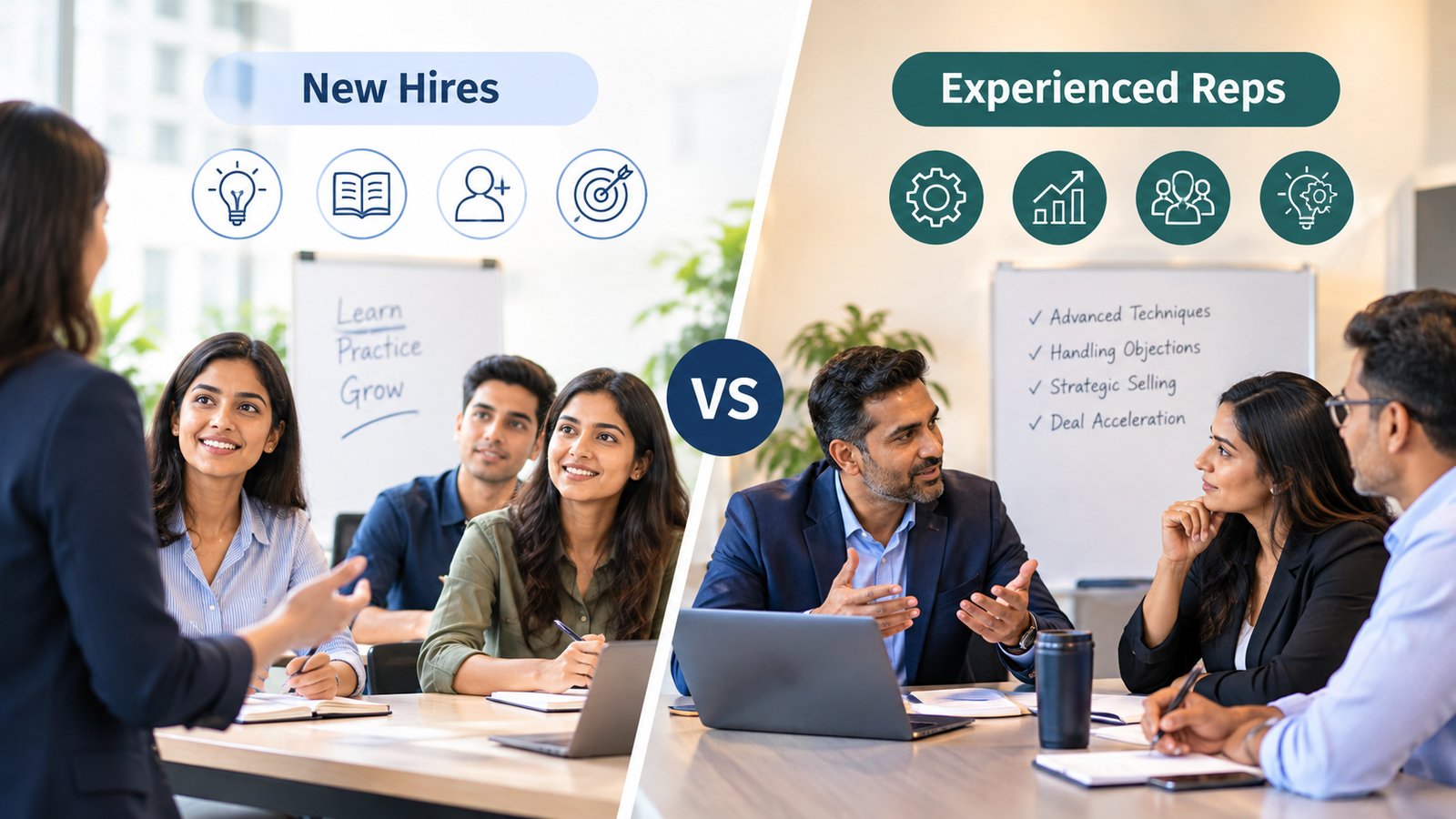
One of the most consistent complaints about traditional sales training is that it treats every salesperson the same. A new joiner with three months of experience sits through the same session as someone with eight years. Neither gets what they actually need.
The next phase of sales training in India is built around the individual. Skill assessments at the start of a programme identify where each person is. Training paths are then customised based on those gaps. A salesperson struggling with objection handling gets targeted practice on that. Someone who is strong in discovery but weak on closing gets a different track entirely.
This kind of personalisation was difficult to deliver at scale before. Digital platforms and AI-driven tools are making it practical, even for mid-sized sales teams. Over the next few years, personalised learning paths will shift from being a premium feature to a baseline expectation in well-run sales training programmes.
Coaching is Taking Centre Stage
Training gives people knowledge. Coaching helps them use it.
This distinction matters more than most organisations realise. A salesperson can sit through a brilliant session on consultative selling and then go back to pitching features the very next day, simply because nobody is reinforcing the new approach in real conversations.
The future of sales training in India is increasingly coaching-led. Structured manager coaching, peer learning sessions and call review practices are being embedded into how sales teams operate day to day, not saved for annual development plans.
This also changes the role of the sales manager. The best sales leaders are becoming coaches first. They are spending more time listening to calls, asking developmental questions, and helping their teams improve conversation by conversation. Training organisations are responding by offering sales manager development as part of broader corporate sales training programmes.
What This Means for Indian Businesses
The organisations that will build the strongest sales teams over the next three years are not necessarily the ones with the biggest training budgets. They are the ones that treat sales learning as an ongoing business function rather than a scheduled event.
That means:
- Investing in digital infrastructure for training delivery
- Building a coaching culture alongside formal programmes
- Using data to understand where people are struggling
- Responding quickly and designing learning experiences that are continuous, relevant, and connected to real selling situations
Sales training trends in India are pointing clearly in one direction: from episodic to embedded, from generic to personalised, and from output-focused to behaviour-focused.
The organisations that make that shift now will have a meaningful advantage in the years ahead.
Final Thoughts
Sales is one of the few functions where the gap between average and excellent is almost entirely about skill, mindset and habit. None of those things develops from a once-a-year workshop. They develop through consistent practice, real feedback and a culture that takes growth seriously.
At MaxifyGrowth Training and Consulting, we help Indian sales teams build exactly that, through structured programmes, sales manager coaching, and digital-first training solutions built for the way modern teams sell.
Visit www.maxifygrowth.com or write to connect@maxifygrowth.com to explore what the right sales training programme looks like for your team.
FAQs
- My sales team has been through multiple training programmes but nothing seems to stick. Why?
Most training fails not because the content is bad but because there is no follow-up. One session cannot build a habit. What sticks is repetition, real feedback and a manager who reinforces the right behaviours in actual selling situations. The programme is just the starting point. - How do I know if my sales team needs training or if the problem lies elsewhere?
If your reps know what to do but are not doing it, that is usually a coaching or accountability issue. If they genuinely do not know how to handle certain situations, that is a training gap. The fix is different for each.
- Is sales training relevant for B2B teams selling complex or high-value solutions?
The longer the sales cycle and the higher the stakes, the more important it is that the team can ask the right questions, handle pushback without folding and communicate value without defaulting to a discount.
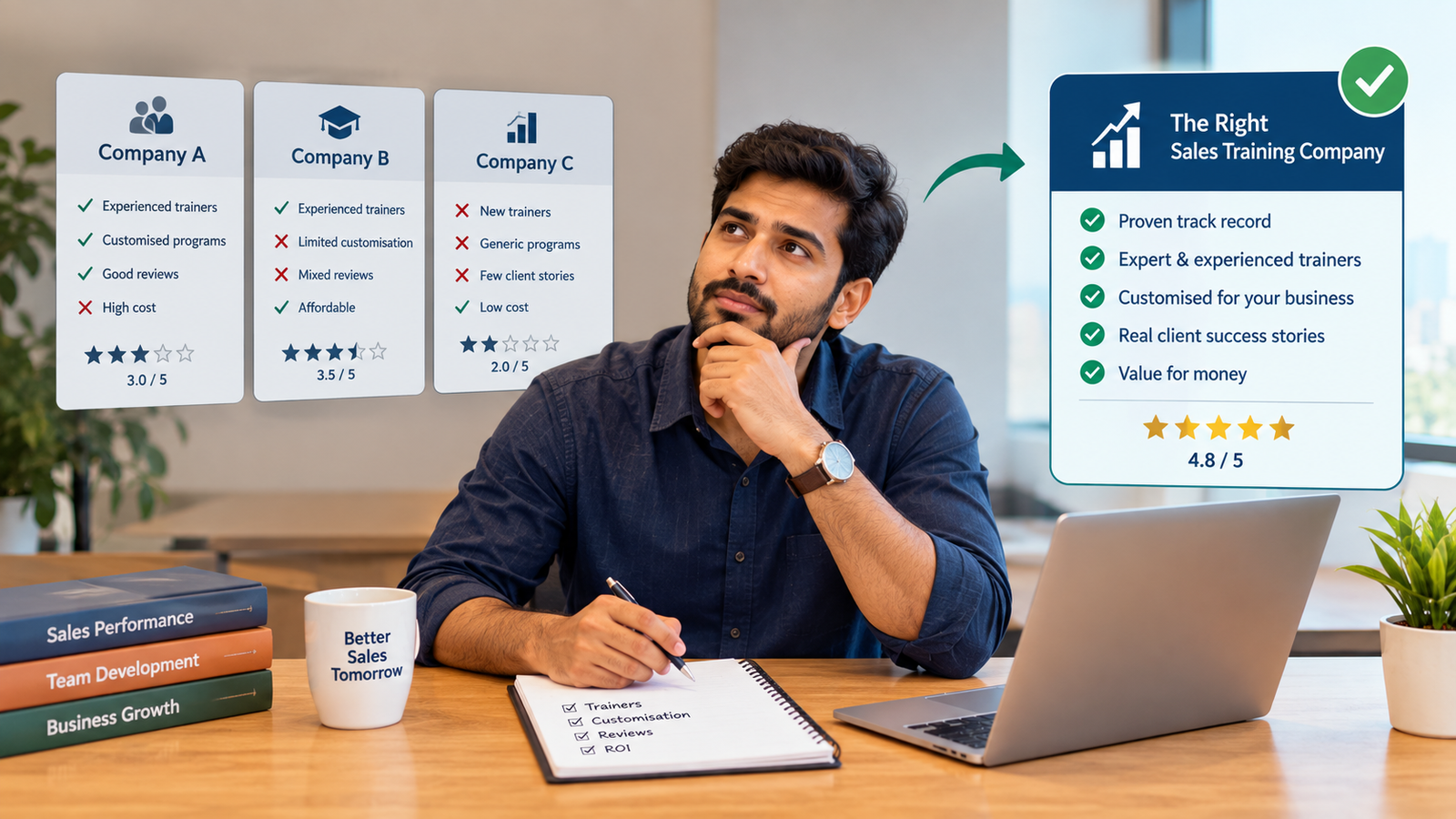
- What should I look for when evaluating a sales training provider in India?
Look at whether they customise for your industry and your actual sales process, or whether they are running the same workshop for everyone. Also ask how they measure outcomes, not just feedback forms at the end of a session, but actual behaviour change over time.
- Does sales training work differently for inside sales versus field sales teams?
Inside sales reps need to create trust and communicate value fast, while field sales involves longer relationships, more stakeholders and a different kind of patience. The skills overlap but the application is different, and training that does not account for that tends to miss for both.