TL;DR
- Sales training for B2B companies works best as an ongoing habit, not a once-a-year event.
- Deals usually stall for the same reasons: weak discovery, a pitch built around features, or a rep who folds the moment pricing comes up.
- B2B sales training built around real calls, not generic scripts, tends to move conversion rates because reps learn to ask better questions instead of talking more.
- Sales effectiveness and steady sales team development grow revenue without requiring a larger marketing budget to generate more leads at the top.
Introduction
A buyer today has already read your pricing page, checked two competitors, and skimmed a case study before your sales representative even gets on the call. That is just how it works now.
So the old playbook – pitch the product, answer a few questions, send a follow-up – does not really hold up. Buyers want a rep who understands their actual problem and can talk about it without reaching for a slide deck every two minutes.
That gap is what sales training for B2B companies is meant to close. Not by teaching people to talk more, but by teaching them to listen for the right things and respond to what they actually hear.
What B2B Sales Training Looks Like When It Is Done Properly
A lot of sales training still happens the same old way. A meeting room, a standard presentation, a few role-plays that feel forced, and handouts nobody looks at again. The team leaves feeling motivated, but within a few days, it is back to business as usual.
That kind of training rarely changes how people sell.
Good B2B sales training works differently. It is built around real sales situations, not theory. A trainer might review an actual sales call from last week or look at a proposal that did not convert and break down what went wrong. The learning feels more useful because it connects to something the salesperson has already dealt with.
That is what makes it stick.
Often, it is the small adjustments that make the biggest difference.
Sometimes it is asking one more question before jumping into a product demo. Sometimes it is staying calm when a buyer questions the price instead of offering a discount too quickly. Even knowing when to stop following up matters. Sending too many emails too close together can make a salesperson seem desperate instead of interested.
In longer B2B deals, where several people are involved in the decision, paying attention to who has stopped responding can tell you a lot. Often, silence from one key person says more than the updates in a pipeline review.
This is where real sales effectiveness improves, not through scripts, but through better judgement in real conversations.
How Better Conversations Move the Conversion Needle
Conversion rates often come down to one thing: how well a salesperson understands the person they are speaking to.
A rep who quickly picks up on what a buyer actually needs will usually perform better than someone repeating product features without understanding the bigger picture.
That is where real sales performance improvement starts.
It is usually not about big changes. More often, it comes from small adjustments in the conversation.
A salesperson might pause a little longer before responding to an objection instead of rushing to defend the product. Another might stop using a long presentation and focus on one or two points that matter most to the buyer.
These may seem like small things, but they add up over time.
Deal by deal, those small improvements start changing the way the pipeline moves. After a few months, the difference becomes clear.
Deals move faster instead of staying stuck at the same stage. Fewer prospects disappear after the first conversation. Win rates improve against regular competitors, not because the product changed, but because the sales team got better at communicating its value.
That is what stronger sales effectiveness looks like in practice. It is not about sounding more convincing. It is about having better, more relevant conversations that help buyers make decisions with confidence.
Why a One-Time Workshop Rarely Sticks on Its Own
A one-time workshop can introduce new ideas, but it rarely changes habits that salespeople have built over years. Most go back to their old way of selling within days or weeks.
That is where B2B sales consulting becomes valuable.
Instead of stepping away after training, a consultant stays involved, reviews real deals, listens to actual sales conversations, and helps teams improve as things happen.
This makes learning more practical and easier to apply.
For growing companies or teams entering new markets, it also brings consistency. Everyone follows a stronger process instead of depending too much on a few top performers to drive results.
Building Sales Effectiveness That Outlasts a Single Quarter
Making more calls does not make a sales team better. Making each call count does. A representative who handles fewer conversations but reads buyers accurately will likely outperform someone chasing volume by quarter-end.
This is also where specialised training pays off, not just general selling skills. Sales team development for senior reps managing large accounts looks completely different from training a fresher who just joined. Key account manager training is a good example. Big accounts come with renewal pressure and relationships that took years to build, none of which a generic sales playbook prepares anyone for. Treat a key account the same way you treat a first-time buyer and you will probably lose it within two renewal cycles.
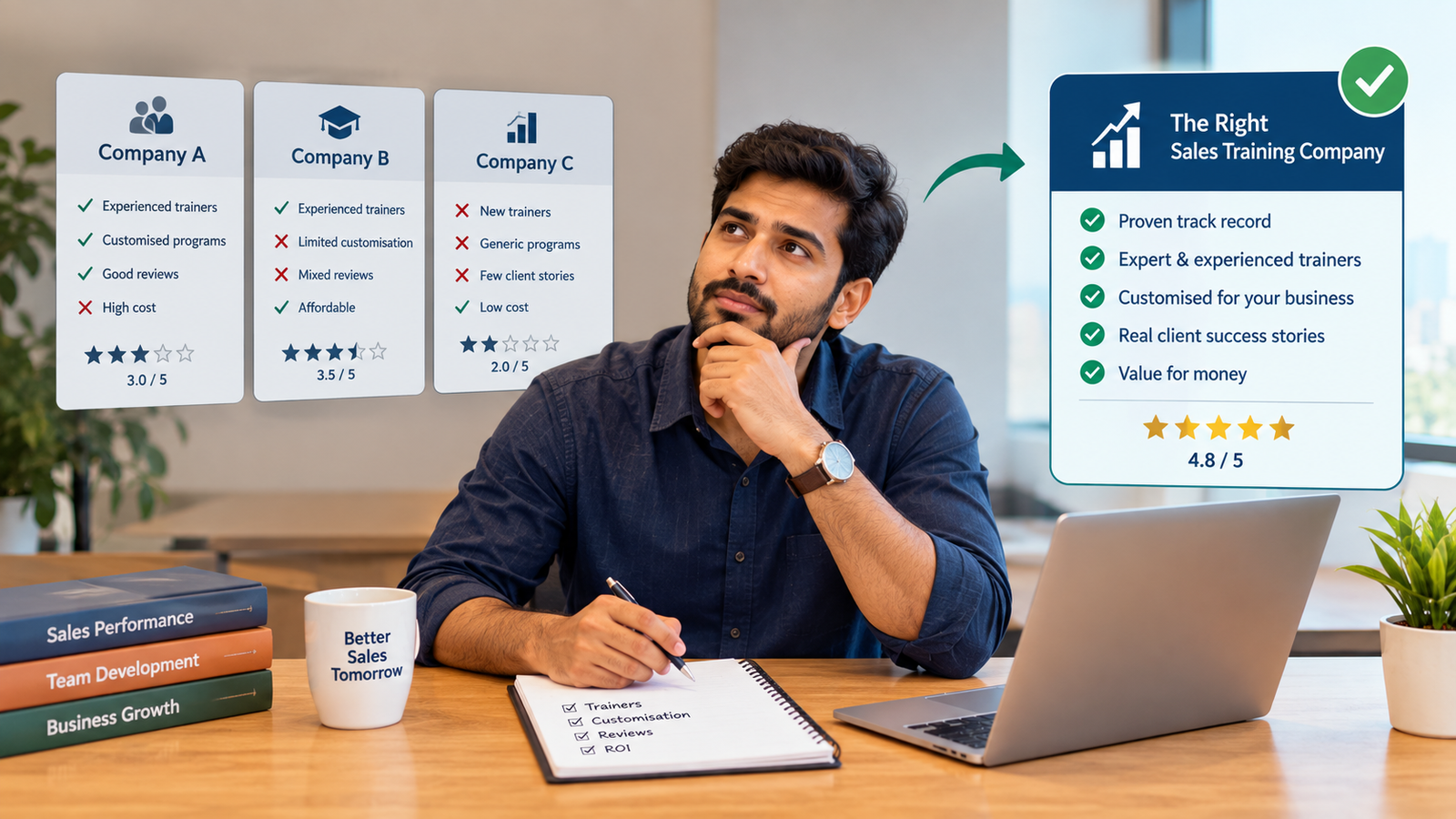
Picking the Right Training Partner for the Indian Market
Plenty of training providers run the same programme everywhere, regardless of whether the client sells in Mumbai or Munich. That rarely works, because B2B buying in India comes with its own pace, its own price sensitivity, and usually one extra decision-maker nobody mentioned in the first call.
That is why choosing the best business consultant in India matters.
A strong training partner understands how sales actually happen in the Indian market. They do not rely on generic global examples. Instead, they take time to understand how your team currently sells, where deals are getting stuck, and what needs to improve.
Where the Real Revenue Growth Comes From
Revenue rarely jumps because of one big change. It moves because a sales team gets a little sharper with every call, asks one better question than last month and stops losing winnable deals to the same avoidable mistakes. That is what steady sales training for B2B companies is actually for.
At MaxifyGrowth Training and Consulting, we work with B2B sales teams across India to build exactly that kind of capability, which is practical, ongoing, and tied to the deals your reps are working on right now.
If you want to strengthen your B2B sales team with practical, ongoing training, visit www.maxifygrowth.com or write to connect@maxifygrowth.com
FAQs
- How soon will we see results from B2B sales training?
In terms of behaviour, fairly quickly. Reps usually handle calls differently within a few weeks. The actual conversion rate shift tends to show up over two or three months.
- Is the training only useful for junior reps who are still learning?
Not at all. Senior reps often get more out of it, especially around large accounts, tough negotiations, or deals that keep stalling at the same stage.
- What is the difference between sales consulting and a training workshop?
A workshop hands over ideas in a fixed window and steps away. Consulting stays in the room, reviews actual deals as they happen and adjusts the coaching while the team is still applying what they learned.
- Does training need to be different for Indian B2B buyers specifically?
Quite a bit, yes. Decision timelines, price sensitivity, and the number of people involved in a purchase often look nothing like a typical Western sales motion, so training that ignores this usually falls flat.
- Can this kind of training help with large, complicated accounts?
Yes, and that is usually where it helps the most. Key account work involves renewals, internal politics, and long relationships, none of which a standard first-time sales pitch is built to handle.